A Handshake Deal Isn't a Construction Contract. It's a Gamble.
Jonathan served 150 customers that year. One of them took him to court. It still cost him money, time, and sleep. His words: it was not fun.
He is the lucky one. He had documentation. Most contractors walk into a dispute with a handshake, a text thread, and a prayer.
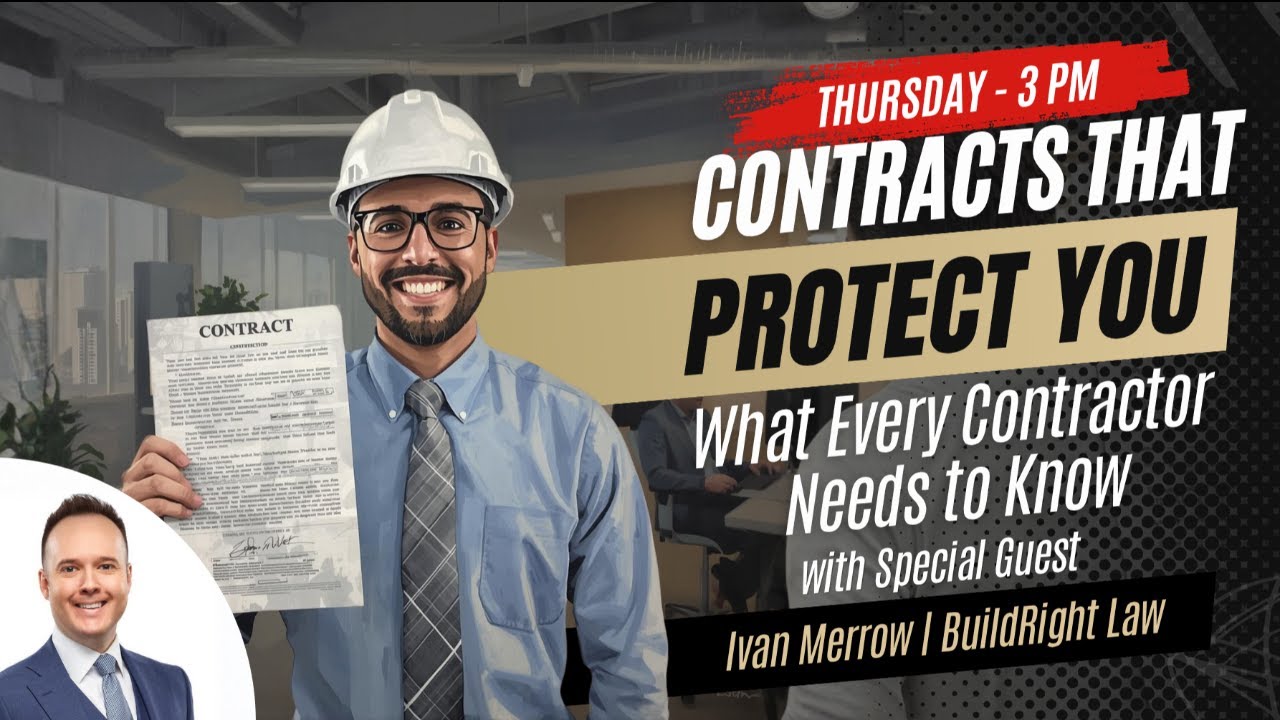
In this training we brought in construction lawyer Ivan Merrow, founder of Build Right Law in Ontario, to walk through what actually keeps you on the winning side. The short version: your construction contract is not paperwork you sign and forget. It is a tool. And most contractors never use it as one.
Being Busy Is Not Being Protected
You can run 150 jobs a year and still bleed out on one bad one. Being busy is not being profitable, and it is sure not being protected. Profit is not just made on the tools. It is defended on paper.
And hear this: the bigger you get, the more disputes you attract. Some owners are predators who never intended to pay. Most disputes, though, come down to one thing: a misunderstanding that was allowed to live because nothing was written down clearly.
What Makes a Construction Contract Enforceable
Under common law, a binding contract needs three elements: offer, acceptance, and consideration. Consideration is the one that confuses people. It is what separates a promise from a contract. Both sides give something, both sides get something.
If any of the three is missing or fuzzy, you are not holding a contract. You are holding a conversation.
Scope, Time, Cost: Clear Enough to Explain at the Kitchen Table
The most important pieces of your contract are scope, time, and cost. They have to be so clear that the owner can read them and explain to their spouse at home when they owe you money, how much, and for what.
The real test is tougher. If that owner takes your contract to a lawyer, their own lawyer should read it and tell them they are obligated to pay you. That is what a good contract does. It ends disputes before they start.
On payments: tie every payment to a completed, verifiable milestone. And take smaller payments more consistently instead of one giant check at the end. That big final check makes every owner stop and hesitate, and that hesitation is where punch lists, complaints, and delays breed. Ten percent outstanding at the end will not make or break you. Fifty percent will keep you up at night.
Change Orders: Signed Before the Work Starts
Changes will happen. The gold standard is a written change order that lays out the change in scope, the change in time, and the change in price, signed and initialed by the owner before you lift a finger.
If they will not sign, you do not do the change. That is not being difficult. A huge majority of construction disputes come down to the owner not understanding they cannot rework the job midway without affecting time and cost.
For the smaller extras, and a renovation can have dozens, use an addendum to work: pre agreed rates for a supervisor and field employees, agreed with the customer up front. No surprises, no arguments, no free work.
Strike the Pay When Paid Clause
First thing to hunt for in any contract review: pay when paid and pay if paid clauses. Strike them if you can, and you should try hard. Those clauses mean that because of circumstances completely outside your control, you do not get paid. Horrible situation. Do not volunteer for it.
The Prompt Payment Act Is on Your Side
If you work in Ontario, the law now backs you up. Under prompt payment legislation, owners must pay contractors within 28 days of a proper invoice, and contractors must pay their subs within 7 days of getting paid. Before this, payment terms were whatever the side with more power could bully into the contract.
It also created adjudication, a fast track dispute process that can wrap in as little as six weeks. Know your rights before you need them.
Vet the Client Before You Vet the Job
Last tool, and it costs nothing: due diligence. Google your client. Search public court databases to see how often they sue people, especially on commercial work. For high value jobs, run credit and legal history checks.
There are wolves out there hunting for contractors with poorly documented projects. A tight construction contract plus a vetted client keeps you off the menu.
Frequently Asked Questions
What makes a construction contract legally enforceable?
Under common law, three elements have to be present: an offer, acceptance of that offer, and consideration. Consideration is the part people fumble. It is what separates a casual promise from a binding contract. Each side has to give something and get something. If one of those three pieces is missing, you do not have a contract. You have a conversation.
What is the Prompt Payment Act?
In Ontario, prompt payment legislation entitles contractors to be paid by owners within 28 days of a proper invoice, and contractors must pay their subs within 7 days of getting paid themselves. Before this law, payment terms were set purely by contract, and the side with more power stretched them out. It also brought in adjudication, a fast track dispute process that can be over in as little as six weeks.
Should I sign a contract with a pay when paid clause?
Strike it if you can, and you should try hard. A pay when paid or pay if paid clause means that because of circumstances completely outside your control, you do not get paid. That is a horrible position to be stuck in. It should be the first thing you look for in any contract review, before you sign anything.
Do I really need a signed change order for every extra?
Yes. The gold standard is a written change order that spells out the change in scope, the change in time, and the change in price, signed and initialed before the work starts. For smaller ticket extras, use an addendum to work with pre agreed rates. A huge majority of construction disputes come down to the owner not understanding that changes cost time and money. Kill that confusion in writing before it kills your margin.
How do I check out a client before signing a job?
Basic due diligence goes a long way. Google them. Search public court databases to see how litigious they are, especially on commercial work. For high value projects, run credit and legal history checks. There are predators out there who look for contractors with poorly documented projects. Do not be their next mark.
Watch the full training:
Your Next Step
You have three moves. Pick one and do it today.
- Book a free Game Plan Call and we will look at where your business is exposed and how to lock it down.
- Join the free Contractor AI community on Skool and grab the contract and change order resources from this session.
- See everything we build for contractors who are done gambling on handshakes.
And if you want more trainings like this one, we run them free every week inside the Contractor AI community on Skool, Thursdays at 3 PM ET. Show up. Protect the business you are building.


